At first glance, all marketing shares the same fundamental goal: connecting a product or service with someone who needs it. Whether you are selling enterprise software to a global corporation or running shoes to an individual consumer, you are trying to solve a problem and drive a sale.
However, the strategy, psychology, and execution behind these two worlds look entirely different. Mastering the nuances of business to business versus business to consumer strategies is essential for maximizing your return on investment and capturing the right audience.
The Core Dynamic: Logic versus Emotion
The most profound distinction between these two approaches lies in what drives the final decision.
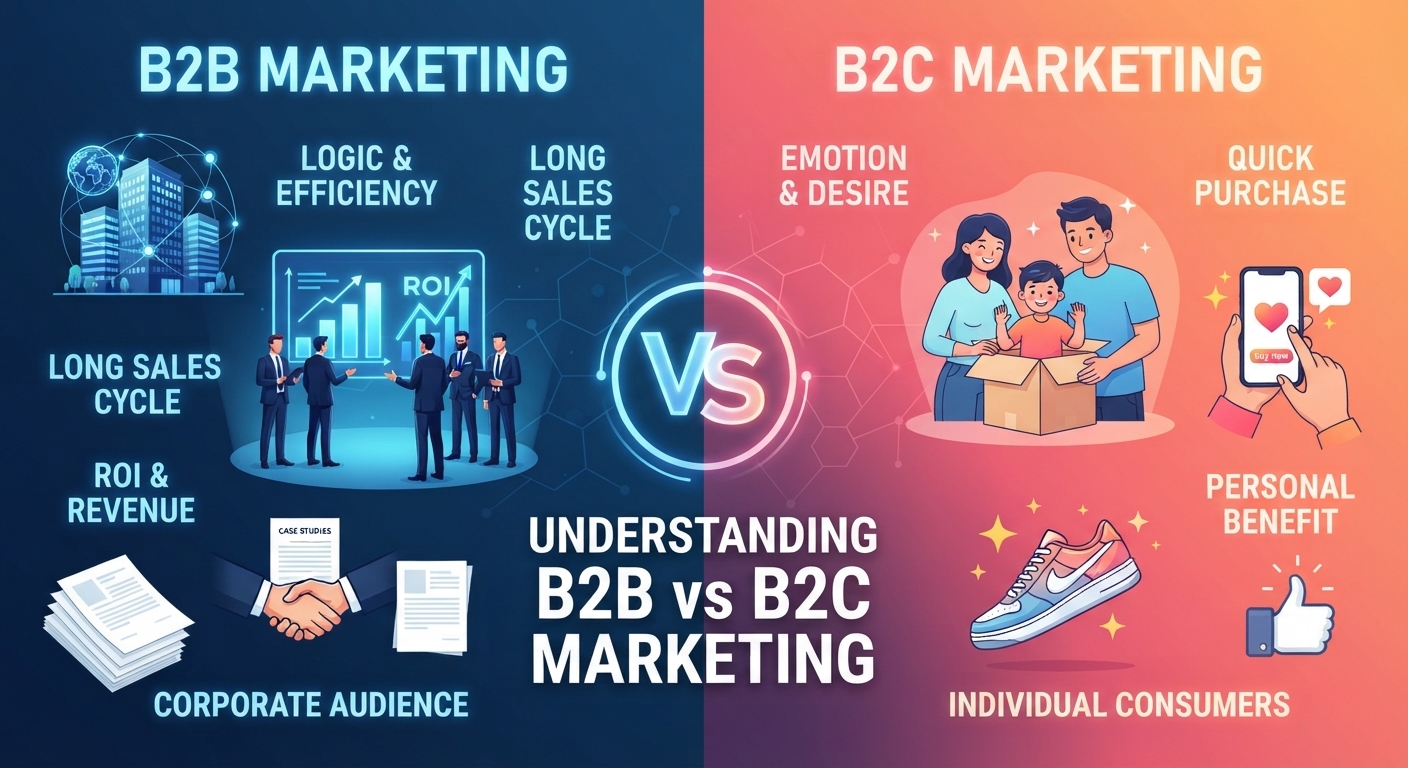
B2C Marketing: Centers heavily on emotion, personal desire, convenience, and instant gratification. A consumer buys based on feelings, brand loyalty, aesthetic appeal, or immediate utility.
B2B Marketing: Focuses squarely on logic, financial return, efficiency, and risk mitigation. A corporate buyer or decision making unit evaluates purchases based on how the solution will cut costs, save time, or generate revenue.
Key Structural Differences in Strategy
Because the audiences and purchase drivers vary, the execution of your campaigns must adapt accordingly:
Audience Scale: B2C campaigns usually target massive, broad consumer segments with high volume and lower individual transaction values. Conversely, B2B strategies target niche, highly specific decision makers where deal sizes are substantially larger.
Relationship Length: Consumer transactions are typically quick and transactional. Industrial or corporate sales involve long consideration cycles, multiple stakeholders, and deep relationship building.
Content and Messaging: Business buyers require white papers, case studies, ROI calculators, and technical specifications to build trust. Consumers respond better to lifestyle imagery, short videos, social proof, and straightforward promotional offers.
Why Strategy Matters for Search Engine Optimization
Search intent changes dramatically depending on whether your target audience is at work or at home.
A consumer searching online might type short, broad phrases looking for immediate retail options. A business buyer uses precise, industry specific terminology looking for vendor solutions. Aligning your keyword targeting with the correct audience ensures your website captures high value traffic that actually converts.
Unlocking Growth in Both Arenas
Understanding whether your brand speaks to individual end users or corporate buyers dictates everything from your website design to your lead generation funnels. By tailoring your messaging to match the correct psychological triggers, you build stronger connections and drive sustainable business growth.
Wilt u Europese klanten, niet alleen verkeer?
Boek een gratis gesprek en we brengen uw product, uw ideale Europese koper en de snelste route naar eerste orders in kaart.
Plan een gesprek